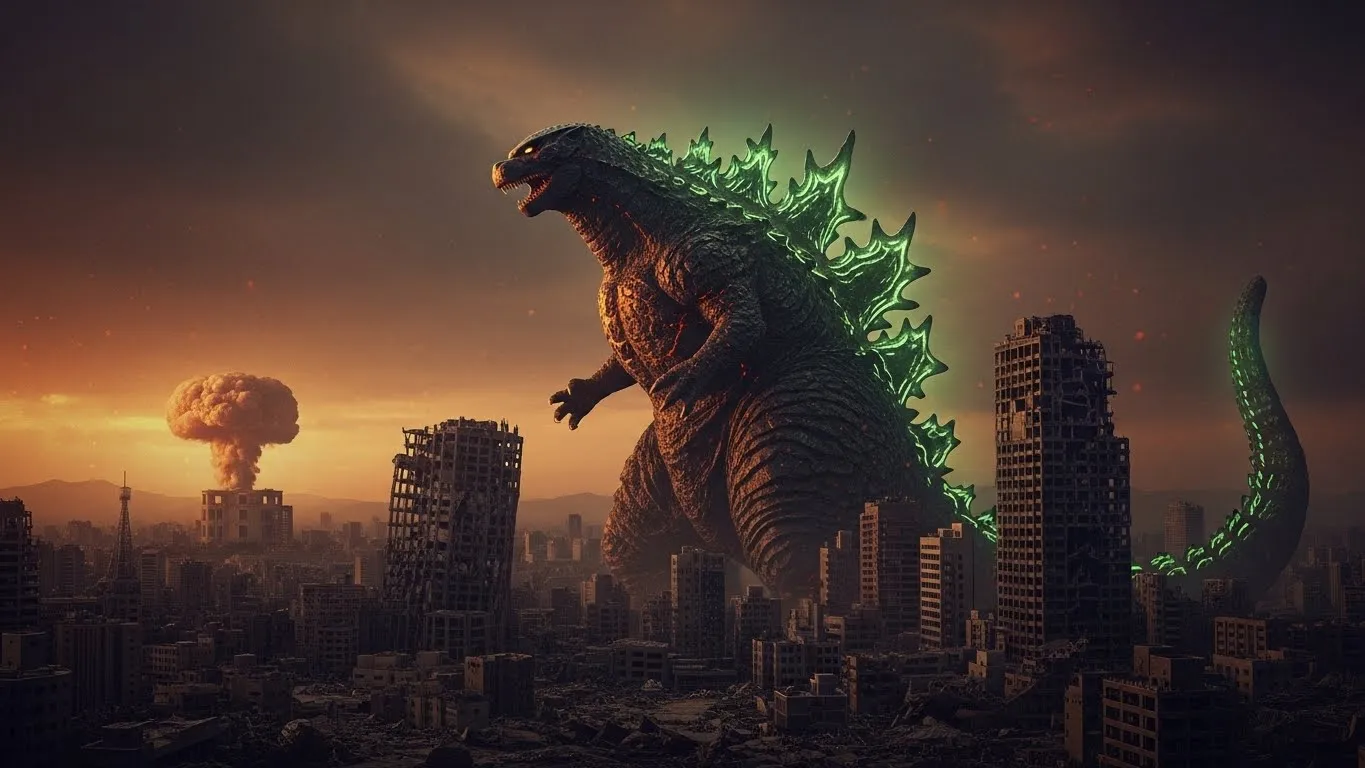
Is Godzilla a Metaphor for the Atomic Bomb is a question that takes us straight into the heart of the monster’s origin.
Created in Japan in 1954, Godzilla emerged from a nation still traumatized by nuclear devastation, and the creature’s destructive power mirrors the fear and aftermath of atomic warfare.
Godzilla’s radioactive birth, scorched landscapes, and unstoppable force reflect the horrors unleashed by nuclear bombs.
Through this lens, Is Godzilla a Metaphor for the Atomic Bomb becomes less a theory and more a powerful symbol of nuclear anxiety, human responsibility, and the lasting scars of war.
Is Godzilla a Metaphor for the Atomic Bomb?
Godzilla first appeared in 1954, less than a decade after Hiroshima and Nagasaki. Japan was still living in the shadow of nuclear devastation. Godzilla became a symbolic language a way to talk about the atomic bomb without directly showing it.
Instead of a weapon, Japan created a monster.
20 Godzilla Metaphors Explained
1. Godzilla is a walking nuclear shadow.
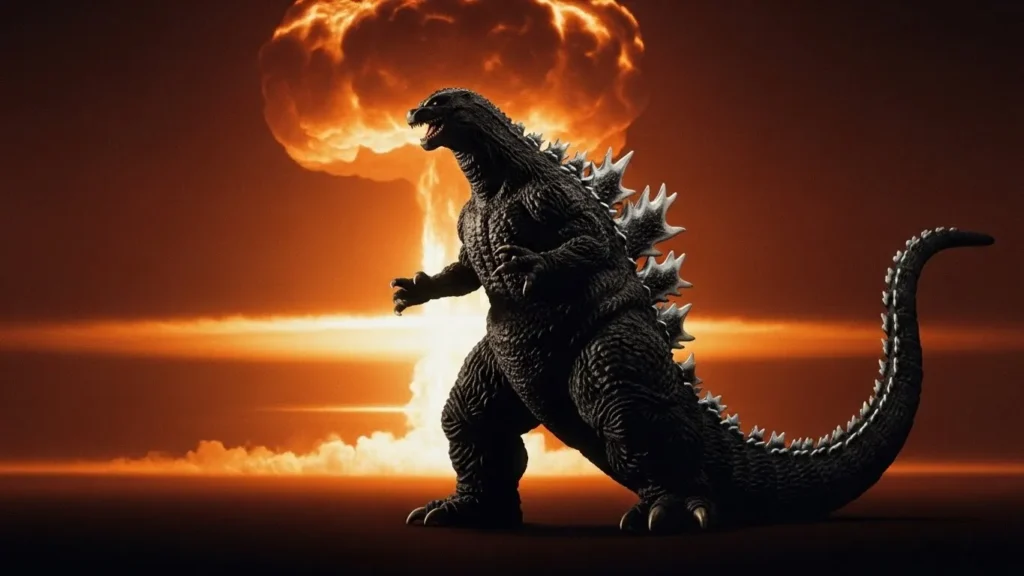
Meaning: Lingering trauma of nuclear war
Explanation: Shadows remain even after the blast is gone.
Examples:
- Godzilla looms like a walking nuclear shadow over Tokyo.
- The city trembled under that nuclear shadow.
2. Godzilla roars like an unleashed bomb.
Meaning: Sudden destructive power
Explanation: His roar mirrors the shock of an explosion.
Examples:
- Godzilla roared like an unleashed bomb.
- The sound alone flattened hope.
3. Godzilla is the bomb that learned how to walk.
Meaning: Nuclear destruction given form
Explanation: Turns an abstract weapon into a living being.
Examples:
- Godzilla is the bomb that learned how to walk.
- The city faced destruction with legs.
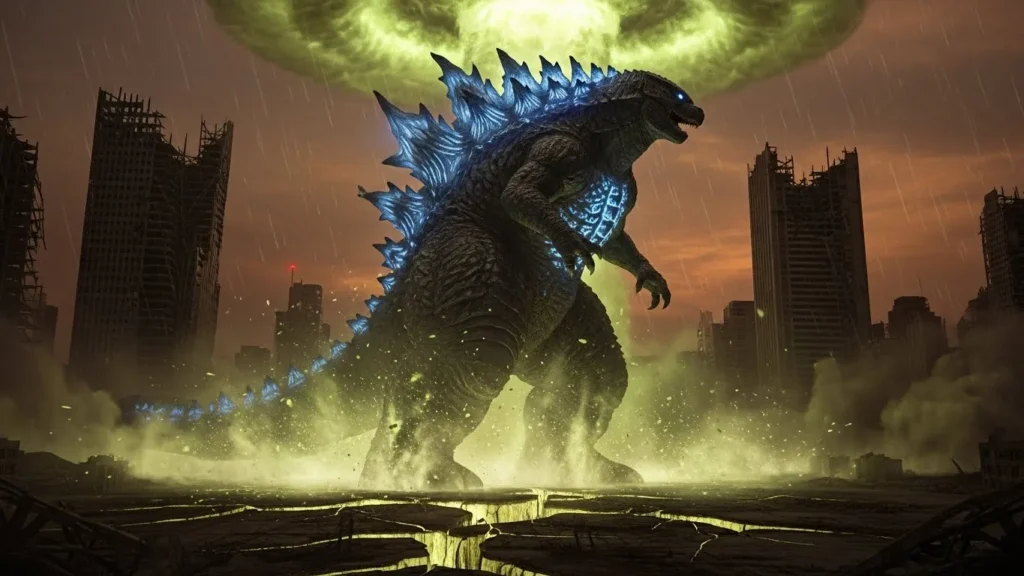
4. Godzilla’s footsteps echo like fallout.
Meaning: Long-term consequences
Explanation: Fallout lingers long after impact.
Examples:
- His footsteps echoed like fallout.
- Damage followed long after he passed.
5. Godzilla is history’s scream.
Meaning: Collective trauma
Explanation: A loud reminder of pain.
Examples:
- Godzilla is history’s scream on screen.
- Each roar tells an old wound.
6. Godzilla is humanity’s punishment wearing scales.
Meaning: Consequences of human actions
Explanation: Nuclear power turned against its creators.
Examples:
- Godzilla felt like humanity’s punishment wearing scales.
- Science came back angry.
7. Godzilla rises like buried guilt.
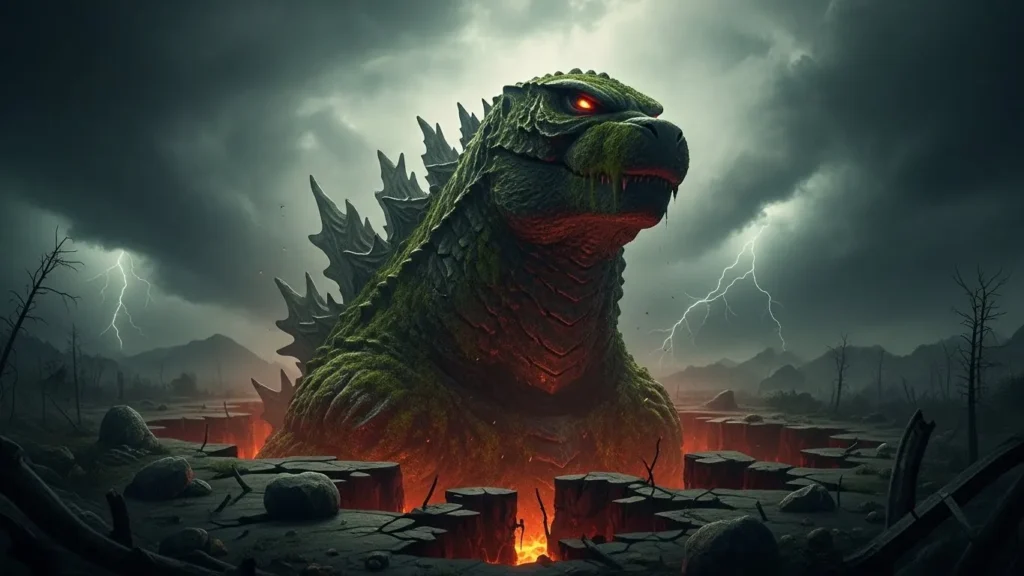
Meaning: Unresolved responsibility
Explanation: Guilt resurfaces when ignored.
Examples:
- Godzilla rose like buried guilt.
- The past refused to stay quiet.
8. Godzilla is radioactive grief.
Meaning: Pain mixed with radiation imagery
Explanation: Emotional suffering linked to nuclear damage.
Examples:
- Godzilla represents radioactive grief.
- Every scene carried sorrow.
9. Godzilla is fear given a heartbeat.
Meaning: Living anxiety
Explanation: Fear becomes a character.
Examples:
- Godzilla is fear given a heartbeat.
- Terror walked the streets.
10. Godzilla is a warning that never sleeps.
Meaning: Constant reminder
Explanation: Nuclear danger never fully disappears.
Examples:
- Godzilla is a warning that never sleeps.
- The threat always returns.
11. Godzilla breathes destruction like radiation.
Meaning: Invisible yet deadly force
Explanation: Atomic breath mirrors nuclear fallout.
Examples:
- Godzilla breathed destruction like radiation.
- You couldn’t escape it.
12. Godzilla is the bomb’s ghost.
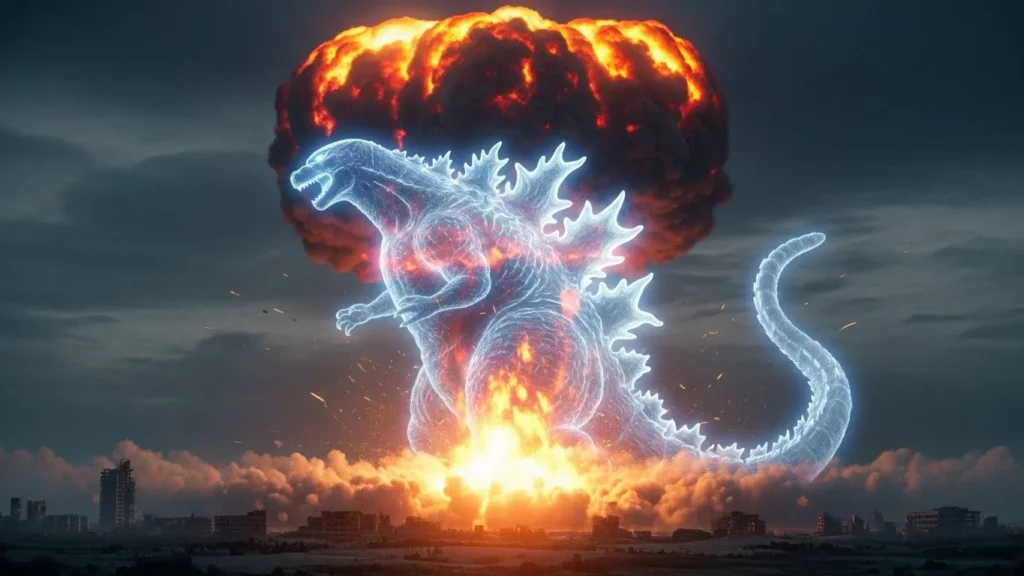
Meaning: Aftereffects of nuclear war
Explanation: Ghosts represent lingering presence.
Examples:
- Godzilla is the bomb’s ghost haunting Japan.
- The past never left.
13. Godzilla is silence after the blast.
Meaning: Emotional emptiness
Explanation: Destruction leaves quiet devastation.
Examples:
- Godzilla felt like the silence after the blast.
- Nothing felt alive.
14. Godzilla is power without mercy.
Meaning: Uncontrolled force
Explanation: Nuclear power lacks emotion.
Examples:
- Godzilla is power without mercy.
- It destroys without choice.
15. Godzilla is nature’s revenge.
Meaning: Balance broken by humans
Explanation: Radiation awakens nature’s fury.
Examples:
- Godzilla is nature’s revenge.
- The earth fought back.
16. Godzilla is science losing control.
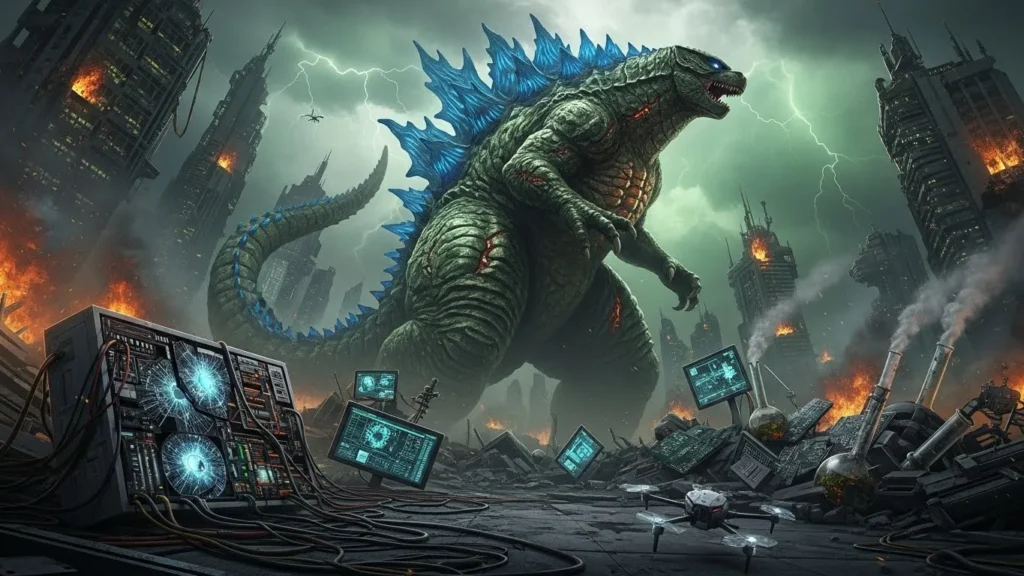
Meaning: Dangerous innovation
Explanation: Science without ethics becomes a threat.
Examples:
- Godzilla is science losing control.
- Knowledge turned monstrous.
17.Godzilla is the past stomping into the present.
Meaning: History repeating itself
Explanation: Trauma resurfaces.
Examples:
- Godzilla is the past stomping into the present.
- You can’t outrun history.
18. Godzilla is a moving mushroom cloud.
Meaning: Visual reference to atomic explosion
Explanation: His shape and power echo the blast.
Examples:
- Godzilla felt like a moving mushroom cloud.
- Destruction followed him.
19. Godzilla is a lesson that walks.
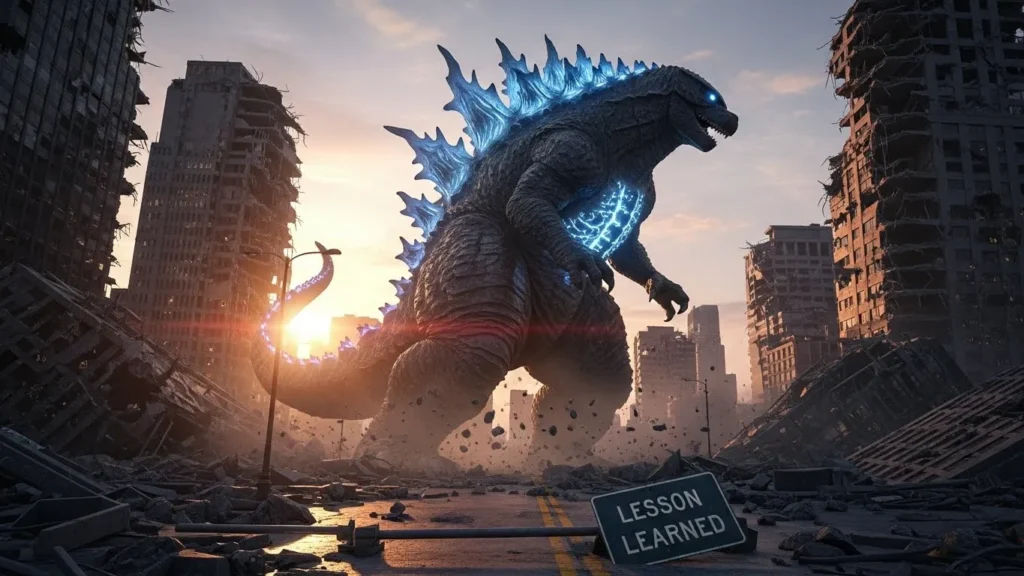
Meaning: Symbolic warning
Explanation: Teaches consequences through story.
Examples:
- Godzilla is a lesson that walks.
- Every step teaches regret.
Practical Exercise
Questions (Pehle Questions)
- Is Godzilla a metaphor for the atomic bomb?
- Why was Godzilla created in 1954?
- What does Godzilla’s atomic breath symbolize?
- How does Godzilla represent nuclear fear?
- Why is Godzilla linked to Japanese trauma?
- Is Godzilla meant to be evil or symbolic?
- What does Godzilla’s destruction represent?
- How is Godzilla different from other movie monsters?
- Can Godzilla be seen as a warning?
- Why does Godzilla keep returning in films?
Answers
- Yes, Godzilla symbolizes the atomic bomb and its aftermath.
- He was created after WWII to express nuclear trauma.
- Atomic breath represents radiation and nuclear fallout.
- He turns invisible fear into a visible threat.
- Japan experienced real nuclear devastation.
- Godzilla is symbolic, not purely evil.
- His destruction reflects nuclear consequences.
- He represents real historical pain.
- Yes, Godzilla warns against misuse of power.
- Because the nuclear threat still exists.
Conclusion
So, is Godzilla a metaphor for the atomic bomb? Absolutely but more than that, Godzilla is a symbol of memory, warning, and consequence.
He reminds us that power without responsibility leads to destruction, and that history doesn’t disappear just because we stop talking about it.
Godzilla isn’t just a monster.
He’s a message.
John Keats ek creative writer hain jo meaningful metaphors ke zariye emotions ko simple lafzon mein bayan karte hain. Wo metaphorh.com par likhte hain.