Have you ever been chatting with someone online and suddenly seen the phrase hone in pop up in a message?
Maybe a friend said, I’m trying to hone in on the problem, and you paused for a second wondering what it actually meant.
You’re not alone a lot of people confuse this phrase because it sounds a bit formal but still shows up in casual conversations, work chats, and even social media captions.
Quick Answer:
“Hone in” means to focus closely on something. It’s a friendly and commonly used phrase for saying you’re paying attention to a specific detail, topic, or goal.
What Does Hone In Mean in Text?

The phrase “hone in” means to focus carefully on something important or to direct your attention toward a specific thing.
People use it when they want to talk about concentrating, improving focus, or narrowing attention to one topic.
For example:
- “I need to hone in on my studies this week.”
- “Let’s hone in on the main issue first.”
In texting, it usually sounds thoughtful, focused, or slightly professional — but it’s still casual enough for everyday conversations.
In short: Hone in = Focus closely = Pay careful attention.
Sometimes people also say “home in on,” which has a similar meaning. In modern texting and casual English, both are commonly used.
Where Is Hone In Commonly Used?
You’ll often see “hone in” in places where people are discussing goals, problems, or important details.
📱 Popular Places People Use It
- 💬 Text messages
- 📸 Instagram captions
- 🎵 TikTok comments
- 👻 Snapchat chats
- 🧑💻 Work Slack conversations
- 🎮 Gaming discussions
- 📚 Study groups
- 🐦 Social media posts
✨ Tone of the Phrase
- ✅ Casual enough for friends
- ✅ Professional enough for work chats
- ✅ Common in motivational content
- ❌ Not flirty slang
- ❌ Not super formal legal language
It’s one of those flexible phrases that works almost anywhere.
Examples of Hone In in Conversation

Here are some realistic examples showing how people actually use “hone in” while texting.
Example 1
A: finals are coming 😭
B: yeah i really need to hone in on studying
Example 2
A: why isn’t the project working?
B: we need to hone in on the main bug first
Example 3
A: your videos are getting better 👏
B: thanks! i’m trying to hone in on editing skills
Example 4
A: what should we improve first?
B: let’s hone in on customer feedback
Example 5
A: you seem distracted lately
B: honestly trying to hone in on my goals rn
Example 6
A: this game is hard 😅
B: just hone in on timing and you’ll win
Example 7
A: any advice for writing essays?
B: hone in on one strong idea instead of too many
When to Use and When Not to Use Hone In
“Hone in” is useful, but it doesn’t fit every situation. Here’s when it works best.
✅ When To Use “Hone In”
- Friendly conversations
- Study discussions
- Goal-setting talks
- Work brainstorming
- Problem-solving chats
- Self-improvement posts
- Social media captions
❌ When Not To Use “Hone In”
- Very formal legal writing
- Emergency situations
- Serious medical discussions
- Official academic papers
- Situations needing simple wording
For example, instead of saying:
- “We must hone in immediately during this emergency.”
It’s clearer to say:
- “We must focus immediately.”
Comparison Table
| Context | Example Phrase | Why It Works |
|---|---|---|
| Friend Chat | “Need to hone in on gym goals 💪” | Casual and motivational |
| Study Group | “Let’s hone in on chapter 3” | Focused and clear |
| Work Chat | “We should hone in on customer issues.” | Professional but natural |
| Gaming Chat | “Hone in on enemy movement 👀” | Strategy-focused |
| “Please focus on the key details.” | More formal and polished |
Similar Slang Words or Alternatives
Sometimes people use other phrases instead of “hone in.” Here are some common alternatives.
| Slang/Phrase | Meaning | When to Use |
|---|---|---|
| Focus on | Pay attention to something | Everyday conversations |
| Lock in | Concentrate seriously | Gaming or Gen Z slang |
| Zero in on | Target something specific | Problem-solving talks |
| Dial in | Fine-tune or focus | Work or sports chats |
| Pay attention to | Notice carefully | Formal or casual settings |
| Concentrate on | Think carefully about | School or professional use |
“Lock in” is especially popular on TikTok and among younger users right now.
Example:
- “I gotta lock in for exams 😭”
That has a more intense and trendy vibe than “hone in.”
Is Hone In Formal or Casual?
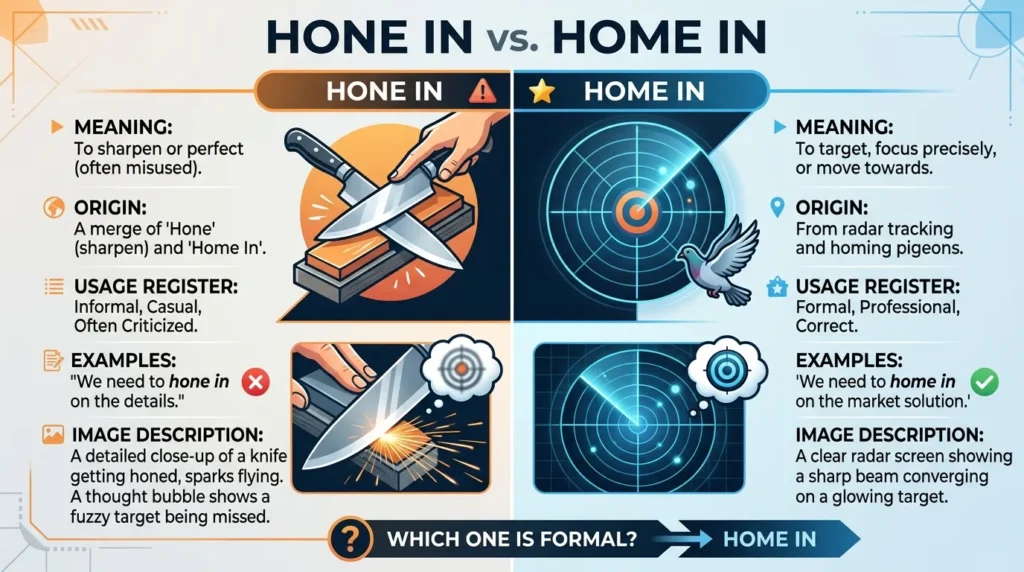
“Hone in” sits somewhere in the middle.
It’s:
- More polished than basic slang
- Less formal than business jargon
- Common in both texting and professional conversations
That’s why people like using it — it sounds smart without sounding overly serious.
Casual Example
- “Trying to hone in on healthier habits.”
Professional Example
- “We need to hone in on customer retention strategies.”
Both sound natural.
Why Do People Use Hone In So Much?
People use “hone in” because it makes focus sound intentional and productive.
Instead of simply saying:
- “Focus on this.”
They say:
- “Hone in on this.”
It adds a sense of:
- Improvement
- Precision
- Attention to detail
- Purpose
That’s why it appears so often in:
- Productivity content
- Self-help videos
- Motivational captions
- Workplace communication
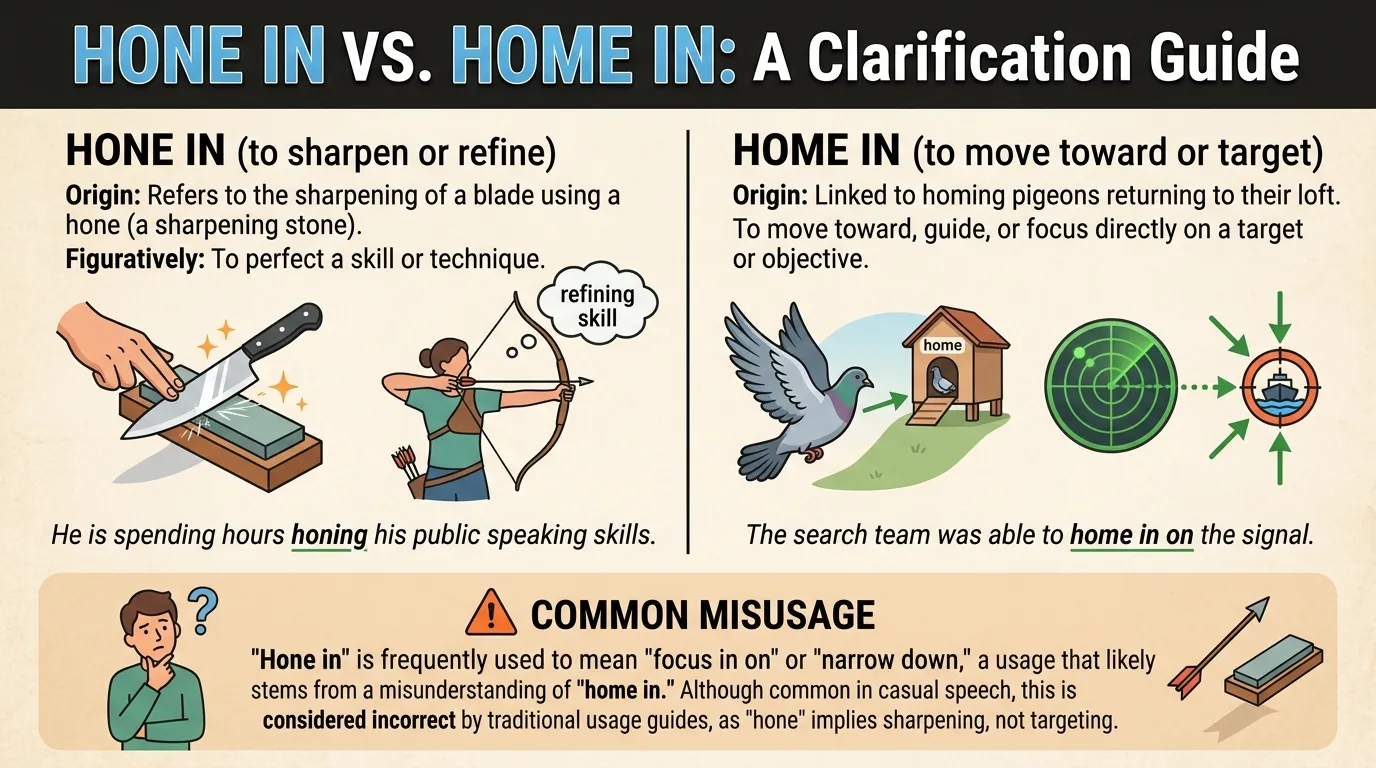
Common Mistakes With Hone In
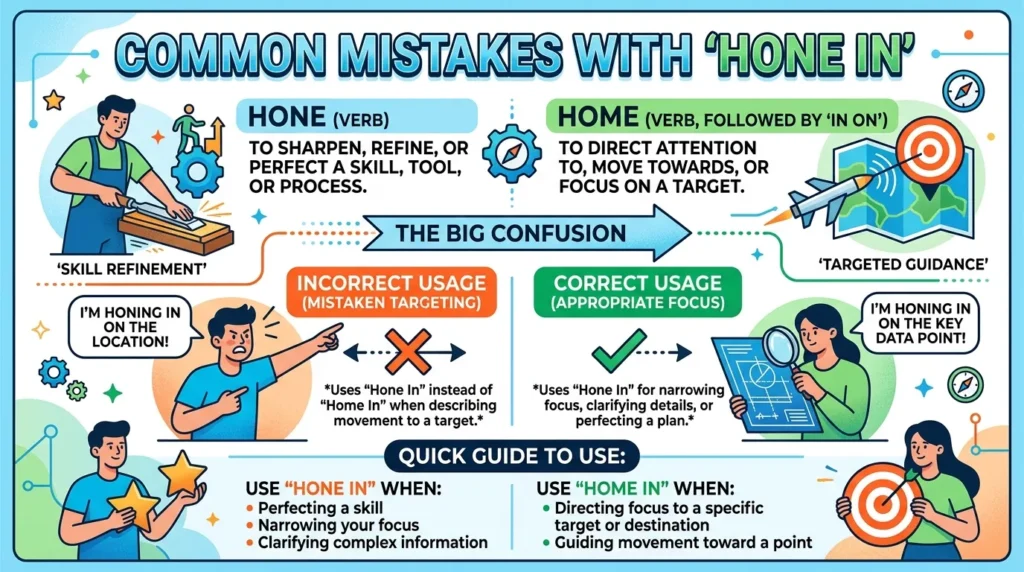
A lot of people confuse:
- Hone in
- Home in
Technically, “home in on” was the original phrase connected to moving toward a target.
But over time, “hone in” became extremely common in everyday English.
Today, most people understand both versions the same way.
Easy Tip
If you mean:
- “focus carefully,”
then “hone in” works perfectly in texting and casual English.
FAQs About Hone In
What does “hone in” mean in texting?
It means to focus carefully on something important.
Is “hone in” slang?
Not exactly. It’s more of a common English phrase than internet slang.
Is “hone in” formal?
It can sound slightly professional, but it also works in casual chats.
Can I use “hone in” on social media?
Yes! It’s very common on TikTok, Instagram, and productivity posts.
What’s the difference between “hone in” and “focus on”?
“Hone in” sounds more precise and intentional.
Is “hone in” flirty?
No, it’s usually neutral and focus-related.
Can students use “hone in”?
Absolutely. It’s common in study and academic discussions.
Is “home in” wrong?
No. “Home in” is actually the older original phrase.
Conclusion
Now you know that “hone in” means to focus closely on something important whether it’s a goal, problem, task, or idea.
It’s a simple but powerful phrase that works in texting, social media, study chats, and even professional conversations.
People use it when they want to sound focused, motivated, and intentional without being overly formal.
So next time someone says, “Let’s hone in on the details,” you’ll instantly understand what they mean and you can confidently use the phrase in your own conversations too 🎯

John Keats ek creative writer hain jo meaningful metaphors ke zariye emotions ko simple lafzon mein bayan karte hain. Wo metaphorh.com par likhte hain.