You’re chatting with someone, maybe making plans or sharing an idea, and suddenly they reply with just “idc.” You pause for a second.
Wait… do they really not care? Is that rude? Or are they just being chill? That tiny three-letter reply can feel confusing especially if you’re not used to texting slang.
Don’t worry, though. Once you understand it, you’ll see it’s actually super common (and sometimes misunderstood).
Quick Answer:
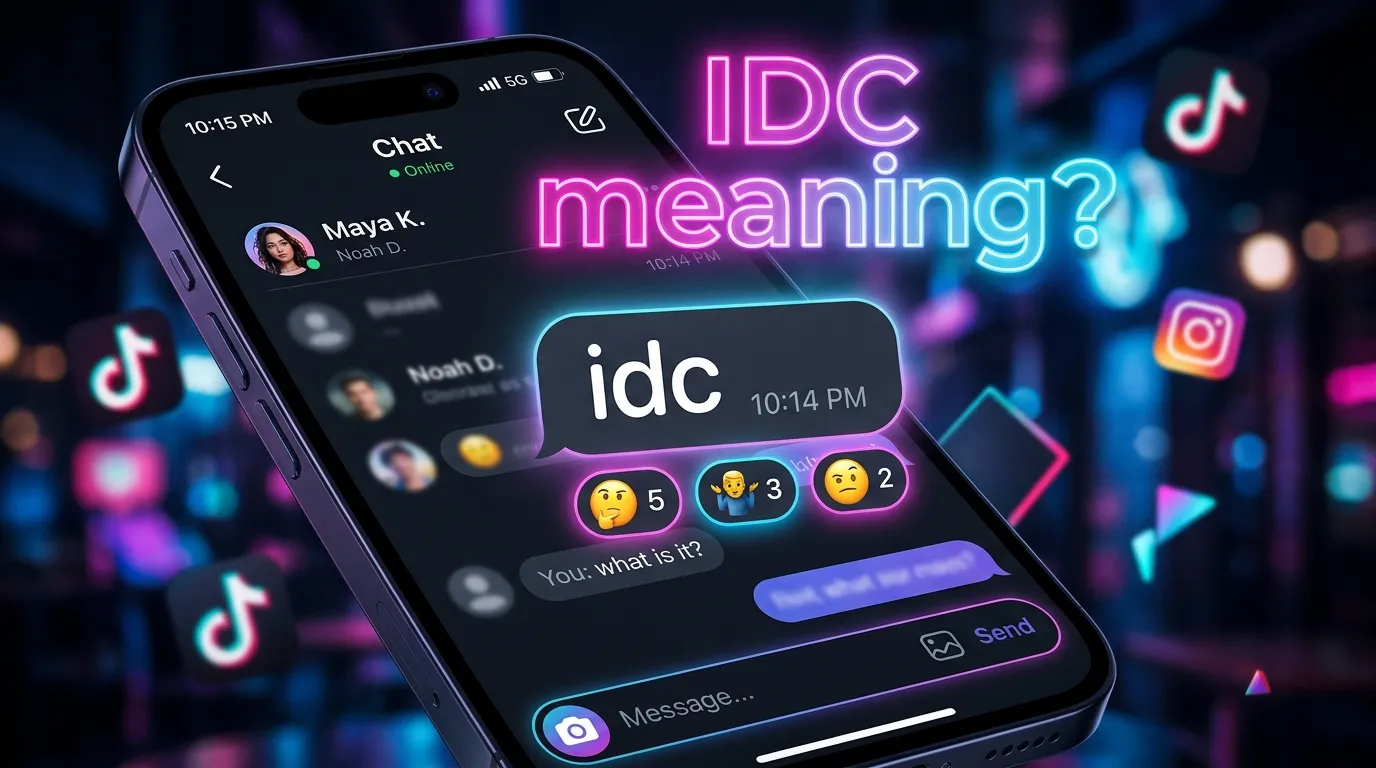
IDC means “I Don’t Care.” It’s a casual and sometimes blunt way of saying you’re okay with anything or have no strong preference.
🧠 What Does IDC Mean in Text?
IDC stands for “I Don’t Care.”
People use it when they don’t have a preference, aren’t bothered by a situation, or simply don’t mind what happens. However, the tone can change depending on context—it can sound relaxed or a bit rude.
👉 Example:
“what do you wanna eat?”
“idc, anything is fine”
Here, the person isn’t being rude—they’re just flexible.
In short: IDC = I Don’t Care = I have no preference / it doesn’t matter to me
📱 Where Is IDC Commonly Used?
You’ll often see IDC in casual, fast-paced conversations online.
Here’s where it’s most popular:
- 📱 Text messages (SMS, WhatsApp) – quick replies
- 👻 Snapchat – casual chats and streaks
- 🎵 TikTok comments & DMs – reactions and opinions
- 💬 Instagram DMs – everyday conversations
- 🎮 Gaming chats – quick, informal communication
👉 Tone:
- Mostly casual
- Can sound neutral or blunt
- Not suitable for formal or professional communication
💬 Examples of IDC in Conversation
Here are some real-life style chat examples to help you understand how IDC is used:
Example 1
A: pizza or burger? 🍔🍕
B: idc, you pick
Example 2
A: should we go out or stay home?
B: idc honestly 😅
Example 3
A: do you mind if i come late?
B: idc, it’s fine
Example 4
A: which movie do you wanna watch? 🎬
B: idc, surprise me
Example 5
A: i might cancel the plan
B: idc tbh
Example 6
A: what color should i choose?
B: idc lol
Example 7
A: we can meet tomorrow instead
B: idc, works for me 👍
🕓 When to Use and When Not to Use IDC
Using IDC can be tricky because tone matters a lot.
✅ When To Use
- Casual chats with friends
- When you truly have no preference
- Relaxed conversations
- Quick, informal replies
- Situations where tone won’t be misunderstood
❌ When Not To Use
- Formal or professional conversations
- Talking to someone sensitive
- Serious or emotional discussions
- When you want to sound polite or caring
- First-time conversations with someone
📊 Quick Comparison Table
| Context | Example Phrase | Why It Works |
|---|---|---|
| Friend Chat | “idc, you decide 😄” | Casual & relaxed |
| Work Chat | “I’m okay with either option.” | Polite & professional |
| “I have no preference.” | Formal & respectful |
🔄 Similar Slang Words or Alternatives
Here are some slang words and phrases similar to IDC:
| Slang | Meaning | When to Use |
|---|---|---|
| NVM | Never Mind | Canceling or dropping a topic |
| IDK | I Don’t Know | When unsure |
| IMO | In My Opinion | Sharing thoughts |
| WHATEVER | No preference / dismissive | Casual, sometimes rude |
| UP TO YOU | Your choice | Polite alternative |
| I GUESS | Unsure but okay | Casual agreement |
👉 Some alternatives (like “whatever”) can sound even harsher than IDC, so choose wisely.
❓ FAQs About IDC
1. Is IDC rude?
It can sound rude depending on tone. In friendly chats, it’s usually harmless.
2. Is IDC always negative?
No, sometimes it just means you’re flexible or okay with anything.
3. Can IDC be used in professional chats?
No, it’s better to use polite phrases like “I have no preference.”
4. Is IDC used in lowercase or uppercase?
Both “idc” and “IDC” are correct.
5. Can IDC sound flirty?
Not really—it’s more neutral or blunt than flirty.
6. Why do people use IDC?
Because it’s quick and saves time in casual texting.
7. What should I use instead of IDC to sound polite?
Try “I’m okay with anything” or “your choice.”