Have you ever signed up for something online like emails, notifications, or a subscription and suddenly started getting too many messages you didn’t ask for?
Then you probably saw the phrase opt out and wondered what it actually means.
At first glance, it sounds a bit formal or even confusing, especially when you see it in settings, apps, or privacy policies. Don’t worry you’re not alone.
Many people mix it up with similar terms like unsubscribe or leave.
Quick Answer:
Opt out means to choose not to participate. It’s a polite and formal way of saying you want to remove yourself from something like emails, alerts, or services.
In simple words, it’s your way of saying: No thanks, I don’t want this anymore.
🧠 What Does Opt Out Mean in Text?
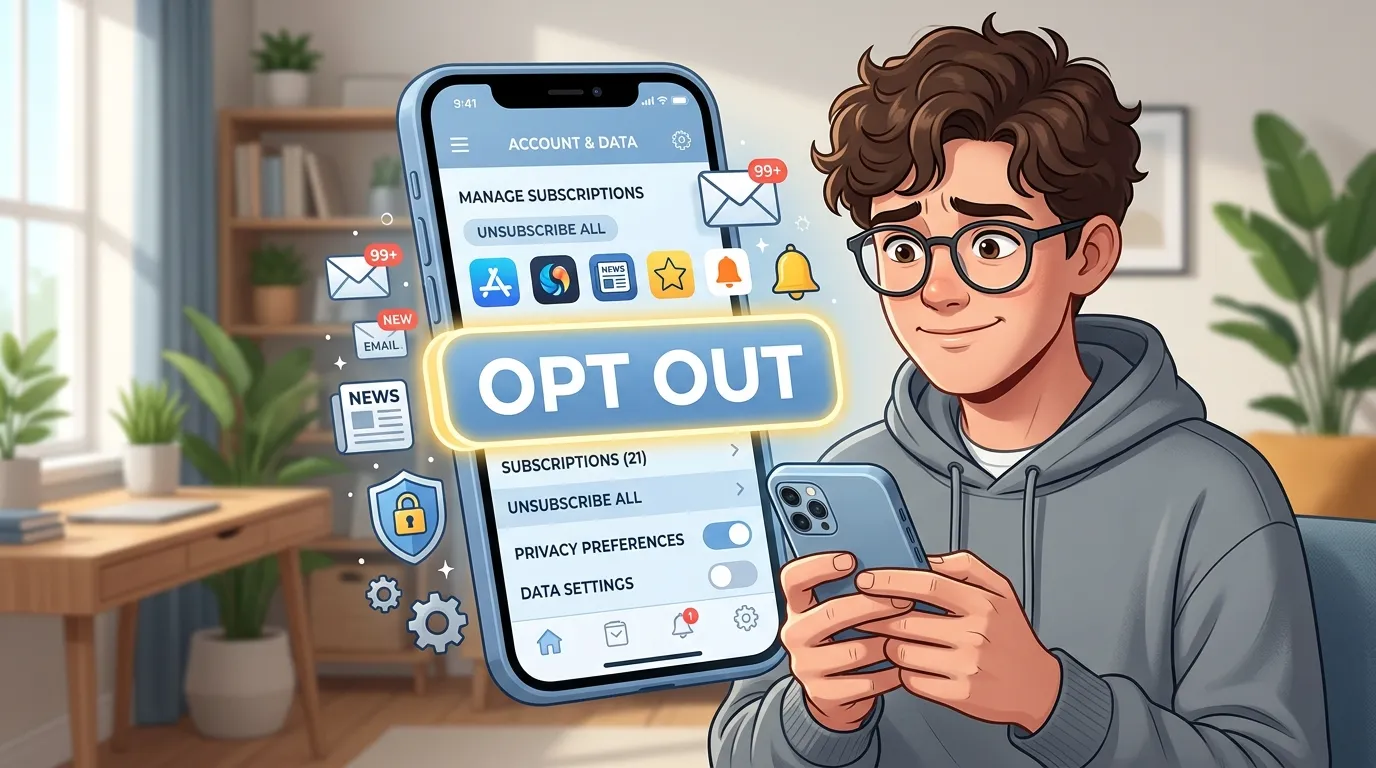
The phrase “opt out” is commonly used in digital communication, apps, and websites. It means you are choosing to decline participation in something you were previously included in.
For example:
- If a website sends you marketing emails, you can click “opt out” to stop receiving them.
- If an app tracks your data, you might see an option to “opt out of tracking.”
💡 Example sentence:
“I decided to opt out of promotional emails because my inbox was getting too full.”
In short: Opt Out = Choose to leave or stop participating = Removing yourself from a service, group, or option.
📱 Where Is Opt Out Commonly Used?
You’ll usually see opt out in formal or semi-formal digital spaces, not in casual texting slang.
📍 Common places:
- 📧 Email subscriptions (newsletters, marketing emails)
- 📱 Mobile app settings (notifications, ads, tracking)
- 🌐 Websites (cookies, data collection)
- 💻 Online services (accounts, memberships)
- 🎮 Gaming platforms (event participation or data sharing)
📌 Tone:
- Mostly formal or informational
- Not slang, but commonly understood in everyday internet use
Unlike casual texting words like “brb” or “lol,” opt out is more professional and used in settings menus or policy pages.
💬 Examples of Opt Out in Conversation
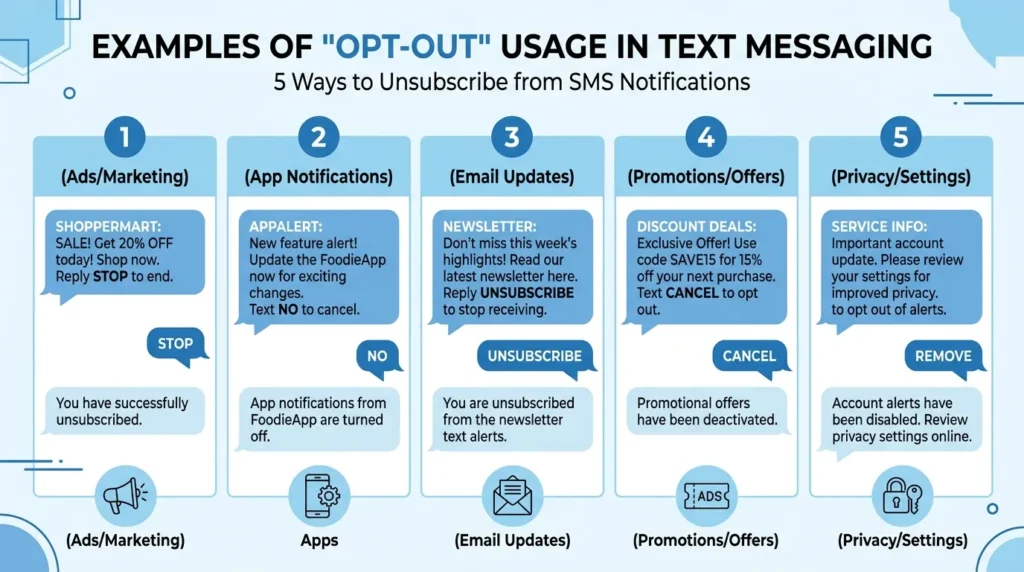
Here are some real-life style chat and online examples:
A: “Why am I getting so many emails from this app?”
B: “You probably didn’t opt out of notifications.”
A: “I don’t want my data shared.”
B: “Go to settings and opt out of tracking.”
A: “These ads are annoying 😩”
B: “You can opt out of personalized ads.”
A: “Did you join the survey group?”
B: “Yeah, but I opted out later.”
A: “Can I stop getting these updates?”
B: “Yes, just opt out from your account settings.”
A: “They keep sending me promotions.”
B: “Click opt out at the bottom of the email.”
A: “I didn’t want to join that mailing list.”
B: “You can still opt out anytime.”
🕓 When to Use and When Not to Use Opt Out
✅ When to Use:
- Canceling emails or newsletters
- Leaving optional services
- Stopping notifications or ads
- Declining data sharing
- Removing participation from programs
❌ When Not to Use:
- Casual texting with friends
- Emotional conversations
- Informal slang chats
- Urgent or personal situations (where simpler language is better)
Opt out meaning in law
Meaning: “Opt out” in law means the legal right to choose not to participate in something, even if you are automatically included by default.
Explanation: In legal systems, opt-out rules often apply to things like data sharing, marketing lists, or class-action lawsuits. A person must actively refuse or withdraw if they do not want to be included.
Examples:
- The law allowed consumers to opt out of targeted advertising at any time.
- She decided to opt out of the class-action lawsuit and handle her case separately.
opt out meaning synonym
Meaning: “Opt out meaning synonym” refers to alternative words or phrases that express the idea of choosing not to participate in something.
Explanation: This phrase is commonly used when people want different ways to say “opt out,” such as in formal writing, forms, or digital settings. Synonyms often include terms like “decline,” “withdraw,” or “unsubscribe,” depending on the context.
Examples:
- You can decline the newsletter if you prefer to opt out of emails.
- She decided to withdraw from the program instead of continuing.
opt out meaning in medical
Meaning: “Opt out” in a medical context means a patient’s choice to refuse or withdraw from a treatment, procedure, or data-sharing program.
Explanation: It is used when a patient does not want to participate in a specific medical option or allows their information to be excluded from certain systems. This term is common in consent forms and healthcare privacy settings.
Examples:
- The patient decided to opt out of the hospital’s research study.
- You can opt out of sharing your medical records with third-party services.
Opt out meaning in credit card
Meaning: Opt out in credit card means choosing not to take part in certain optional services, fees, or offers provided by your credit card company.
Explanation: It is used when a bank or credit card issuer gives you the option to refuse things like insurance, marketing messages, or data sharing. By opting out, you avoid extra charges or unwanted features linked to your credit card.
Examples:
- I opted out of the credit card insurance because I didn’t need it.
- You can opt out of promotional offers by changing your credit card settings.
opt out meaning in job application
Meaning: “Opt out” in a job application means choosing not to participate in a specific option, process, or data-sharing part of the application.
Explanation: It is used when applicants decide to skip things like resume screening by third parties, marketing emails, background checks (in some cases), or optional assessments. Opting out usually means you won’t be included in that specific feature or process.
Examples:
- I decided to opt out of email notifications during the job application process.
- She chose to opt out of third-party resume sharing when applying for the position.
📊 Comparison Table
| Context | Example Phrase | Why It Works |
|---|---|---|
| Friend Chat | “I’m skipping this, no thanks 😄” | Casual and natural |
| Work Chat | “I prefer not to participate.” | Polite and professional |
| “Please opt me out of future emails.” | Clear and formal | |
| App Setting | “Opt out of notifications” | Standard digital instruction |
🔄 Similar Slang Words or Alternatives
Even though opt out is not slang, there are similar expressions people use depending on context.
| Slang/Term | Meaning | When to Use |
|---|---|---|
| Unsubscribe | Stop receiving emails/messages | Emails, newsletters |
| Quit | Leave or stop something | Apps, games, jobs |
| Leave | Exit a group or service | Social apps, chats |
| DND (Do Not Disturb) | Silence notifications | Messaging apps |
| Opt in | Choose to participate | Sign-ups, subscriptions |
| Cancel | Stop a service or plan | Subscriptions, memberships |
❓ FAQs About Opt Out
1. Is opt out the same as unsubscribe?
Almost, but “unsubscribe” is usually for emails, while “opt out” is broader.
2. Is opt out formal or informal?
It is mostly formal and used in apps, websites, and policies.
3. Can I opt out of ads?
Yes, many apps allow you to opt out of personalized ads.
4. What does opt out of tracking mean?
It means stopping apps or websites from collecting your data.
5. Is opt out a slang word?
No, it is a formal digital instruction phrase.
6. Where do I usually see opt out?
In settings, privacy pages, emails, and app permissions.
7. Does opt out delete my account?
No, it usually just removes you from a feature, not your account.