The first time you saw “idgaf” in a chat, it probably made you pause for a second. Is it rude?
Is it funny? Or just another internet slang you missed out on? You’re not alone this bold little acronym shows up everywhere, from memes to group chats, and it can definitely feel confusing at first.
But once you understand it, you’ll see it’s actually pretty simple and powerful.
Quick Answer:
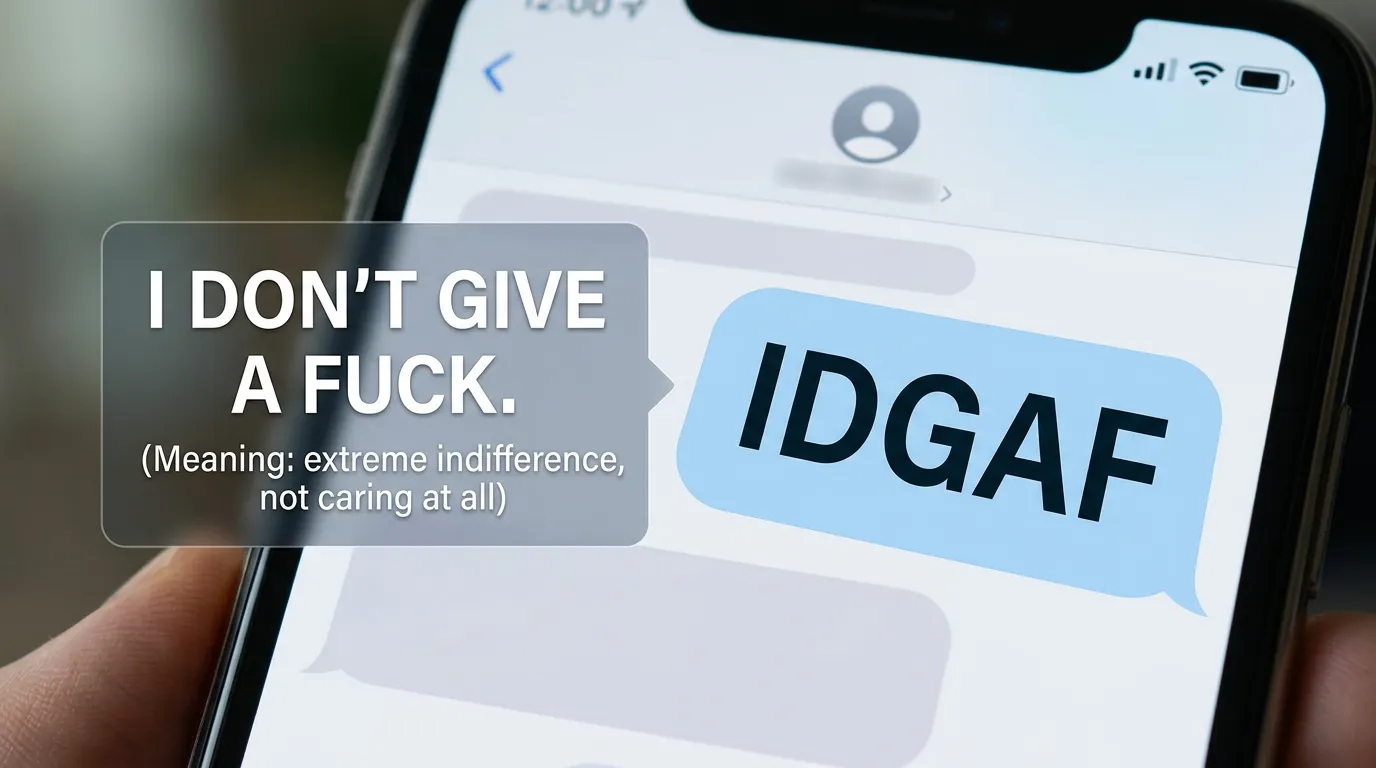
IDGAF means “I Don’t Give A F*.”** It’s a strong, blunt, and often rebellious way of saying you don’t care about something at all.
🧠 What Does IDGAF Mean in Text?
“IDGAF” is an acronym that stands for “I Don’t Give A F*.”** It’s used to express total indifference, lack of concern, or even defiance toward a situation, opinion, or person.
People use it when they want to show that something doesn’t matter to them—sometimes humorously, but often with a strong emotional tone.
Example:
“they’re talking behind my back? idgaf 😂”
In this case, the person is showing they don’t care about gossip.
In short: IDGAF = I Don’t Give A F* = I don’t care at all**
📱 Where Is IDGAF Commonly Used?

You’ll mostly find “idgaf” in casual, informal online spaces. It’s not something you’d use in professional settings.
Here’s where it’s popular:
- 💬 Text Messages — chats with friends or close people
- 📱 Snapchat & Instagram — captions, replies, stories
- 🎵 TikTok — comments and trending videos
- 🎮 Gaming Chats — expressing carefree or bold attitudes
- 🐦 Twitter/X — opinions and reactions
👉 Tone:
- Casual ✅
- Bold/edgy ✅
- Sometimes rude ⚠️
- Not formal ❌
💬 Examples of IDGAF in Conversation
Here are some real-life style chat examples to show how “idgaf” is used:
1
A: they said ur outfit looks weird
B: idgaf i like it 😎
2
A: aren’t you nervous about the test?
B: honestly idgaf anymore 😅
3
A: people gonna judge you
B: idgaf let them
4
A: why didn’t you reply earlier?
B: idgaf about my phone today lol
5
A: he unfollowed you
B: idgaf 😂
6
A: you should care more about this
B: nah idgaf
7
A: everyone’s talking about it
B: idgaf tbh
🕓 When to Use and When Not to Use IDGAF
Because this slang is strong and can sound rude, it’s important to use it in the right context.
✅ When To Use
- With close friends 👯♂️
- In jokes or memes 😄
- When expressing confidence or independence 💪
- Casual conversations only
❌ When Not To Use
- In professional or work chats 💼
- With teachers or elders 👨🏫
- In serious or emotional situations 😢
- When you don’t want to sound rude
📊 Context Comparison Table
| Context | Example Phrase | Why It Works |
| Friend Chat | “idgaf what they think 😎” | Casual & expressive |
| Work Chat | “I’m not concerned about this.” | Polite & professional |
| “This is not a priority for me.” | Formal & appropriate |
🔄 Similar Slang Words or Alternatives
Here are some alternatives to “idgaf” depending on tone and situation:
| Slang | Meaning | When to Use |
| IDC | I Don’t Care | Casual, softer tone |
| IDRC | I Don’t Really Care | Less intense |
| Meh | Indifference | Light, neutral feeling |
| Whatever | Not interested | Slightly dismissive |
| No worries | It’s okay | Friendly & polite |
| I’m chill with it | I don’t mind | Relaxed situations |
❓ FAQs About IDGAF
Q1: Is IDGAF rude?
Yes, it can sound rude because of the strong language. It depends on context and tone.
Q2: Can I use IDGAF in school or work?
No, it’s not appropriate for formal or professional settings.
Q3: Is IDGAF always negative?
Not always. Sometimes it’s used humorously or to show confidence.
Q4: What’s a softer version of IDGAF?
You can use “IDC” (I Don’t Care) or “IDRC” for a milder tone.
Q5: Is IDGAF popular on social media?
Yes, especially on TikTok, Instagram, and texting apps.