Have you ever seen someone go through a situation and thought, “well… that’s kind of what they did to others”?
Or maybe you heard this phrase in a movie or from an elder and wondered what it really means.
The expression “reap what you sow” often shows up in conversations, social media captions, and even motivational talks, but many people still feel a bit confused about its exact meaning and usage.
Quick Answer:
Reap what you sow means “you will face the results of your actions.” It’s a neutral to serious way of saying that your good or bad actions will eventually come back to you.
🧠 What Does Reap What You Sow Mean in Text?
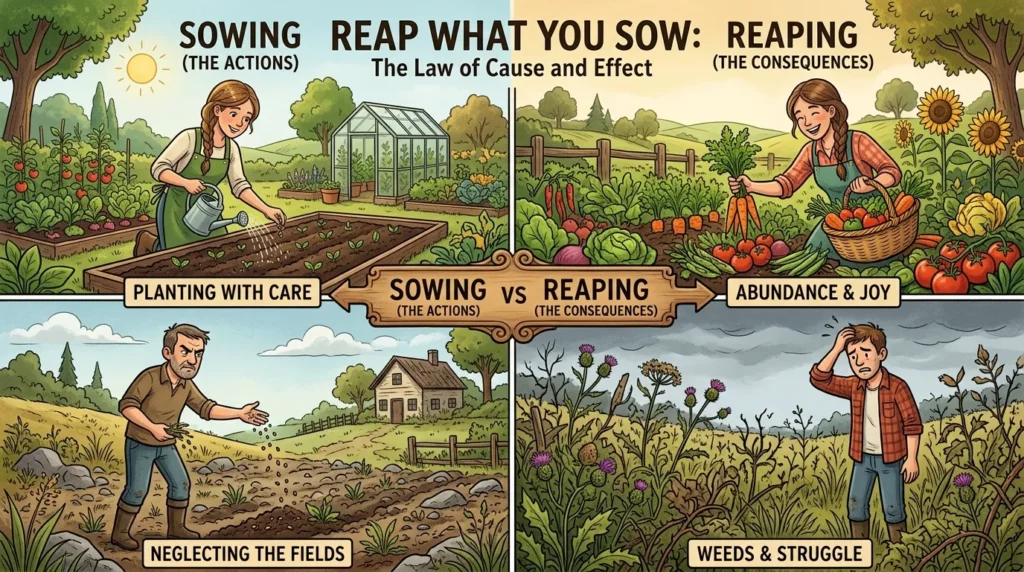
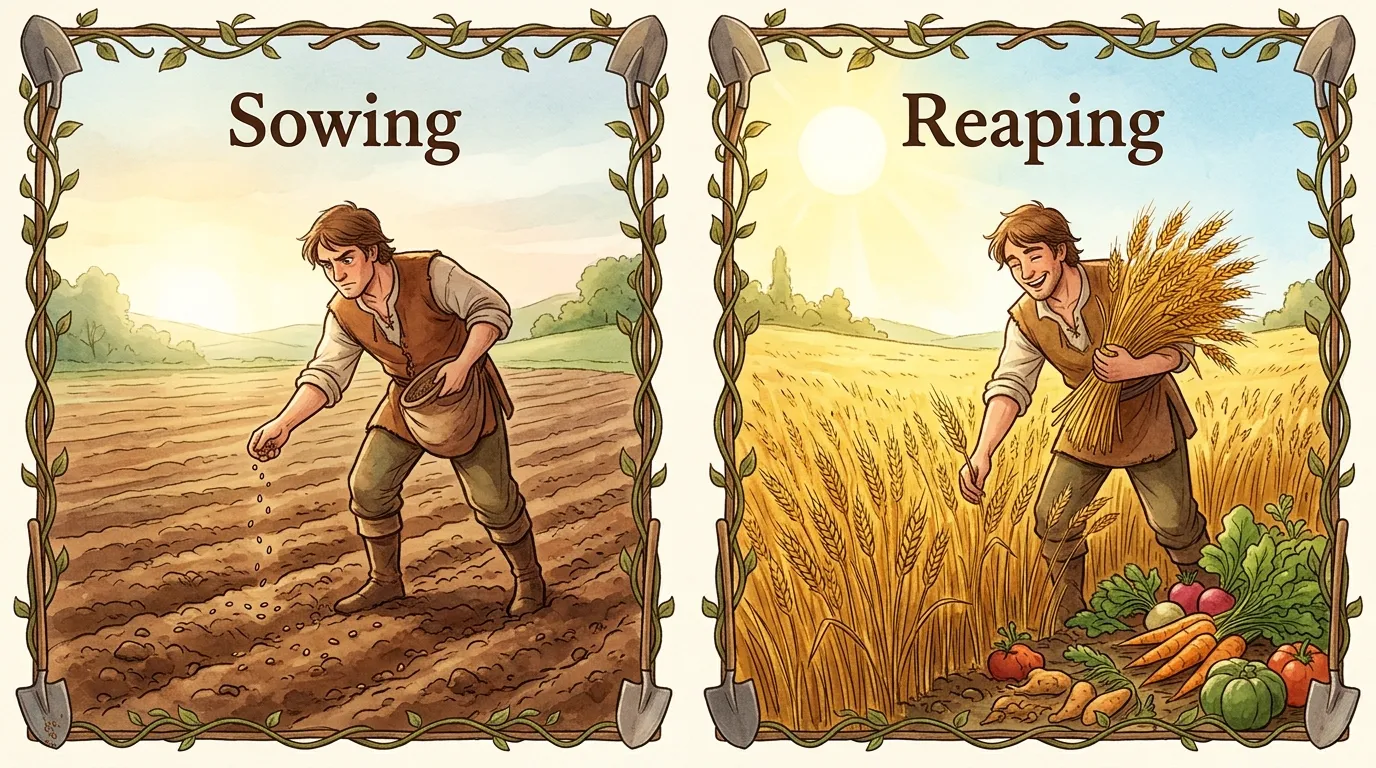
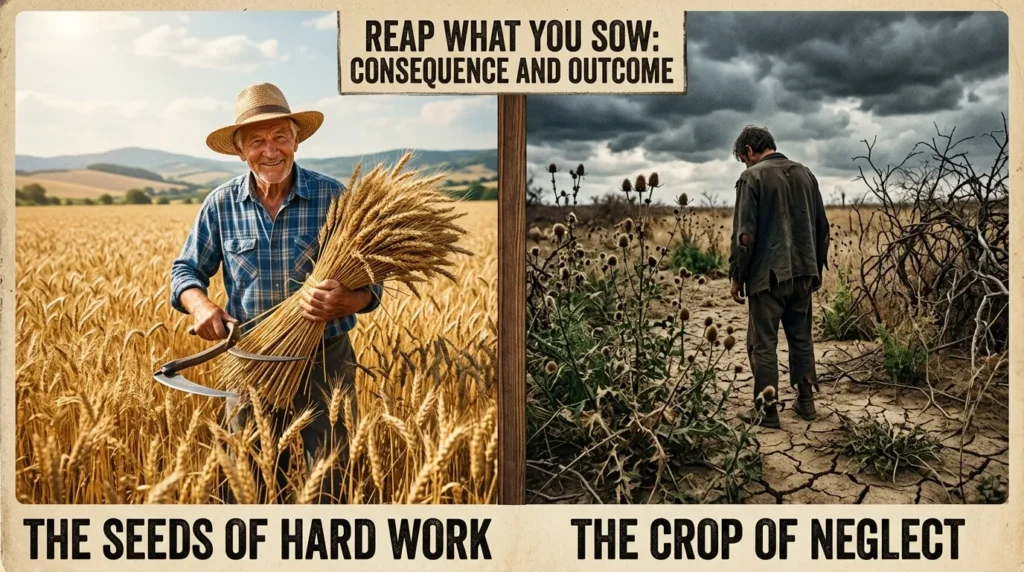
The phrase “reap what you sow” comes from farming. “Sow” means to plant seeds, and “reap” means to harvest them. So, literally, if you plant good seeds, you get a good harvest. If you plant bad seeds, you get a bad harvest.
In texting or everyday conversation, it is used as a life lesson to show that actions always have consequences.
Example sentence:
“You cheated in the game and got banned — you really reap what you sow.”
In short:
Reap what you sow = Your actions decide your results = You get what you deserve (good or bad).
📱 Where Is Reap What You Sow Commonly Used?
This phrase is not casual slang like “LOL” or “BRB.” Instead, it is used in more meaningful or serious conversations.
- 📘 Motivational quotes on Instagram or Facebook
- 💬 Text conversations during advice or arguments
- 🎥 Movies & dramas for dramatic effect
- 🧠 Life advice discussions
- 📢 Educational or moral lessons
✔️ It is semi-formal to formal in tone
✔️ Common in serious or reflective conversations
❌ Not usually used in flirty or playful chats
💬 Examples of Reap What You Sow in Conversation
Here are some realistic texting-style examples to help you understand how people actually use it:
Example 1:
A: He treated everyone badly at work.
B: Yeah… he’s finally losing his job. You reap what you sow.
Example 2:
A: She helped me when I was struggling 🥹
B: That’s good. Kindness means you reap what you sow in a good way.
Example 3:
A: I didn’t study at all before exams 😬
B: Then you’ll reap what you sow tomorrow.
Example 4:
A: They spread rumors about her.
B: Now nobody trusts them. Reap what you sow.
Example 5:
A: I worked really hard this year 💪
B: And now you’re getting promoted. You reap what you sow!
Example 6:
A: He ignored his health for years.
B: Sadly, he’s dealing with issues now. Reap what you sow.
🕓 When to Use and When Not to Use Reap What You Sow
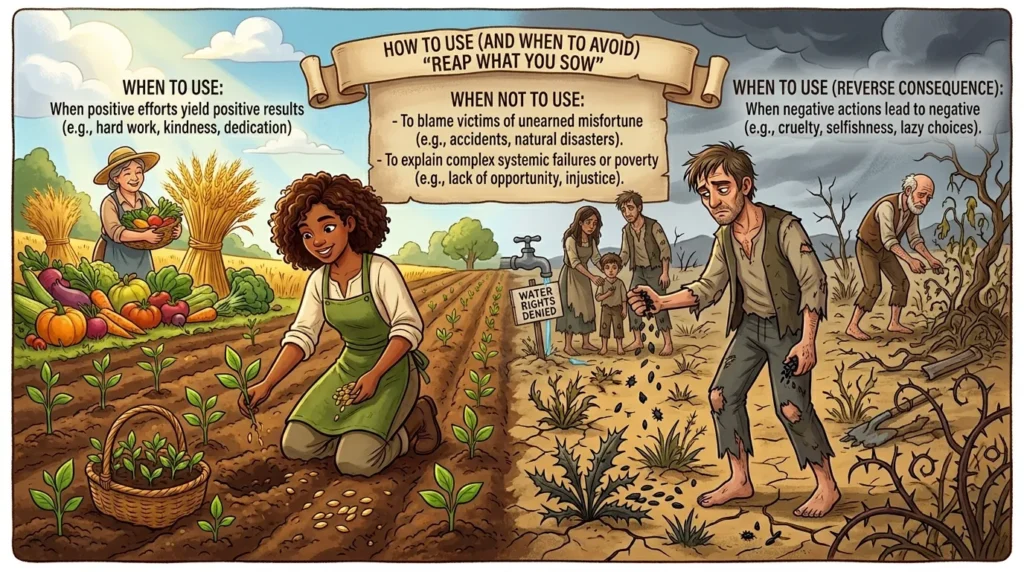
This phrase should be used carefully because it can sound a bit serious or even harsh depending on the situation.
✅ When To Use
- Giving life advice
- Talking about consequences
- Sharing motivational thoughts
- Explaining fairness in life
- Reflecting on actions and results
❌ When Not To Use
- Professional emails (too emotional)
- Sensitive or tragic situations (can sound rude)
- Casual fun chats (too heavy)
- When someone needs comfort, not judgment
📊 Context Comparison Table
| Context | Example Phrase | Why It Works |
|---|---|---|
| Friend Chat | “Be careful… you reap what you sow 😅” | Casual warning |
| Work Chat | “Results reflect effort.” | Professional tone |
| “Outcomes depend on actions taken.” | Formal & neutral | |
| Advice Talk | “Remember, you reap what you sow.” | Thoughtful & reflective |
🔄 Similar Slang Words or Alternatives
Here are some similar expressions you can use instead of “reap what you sow” depending on the tone:
| Slang / Phrase | Meaning | When to Use |
|---|---|---|
| You get what you give | Actions return to you | Casual talk |
| Karma | Cosmic justice / consequences | Social media, spiritual tone |
| What goes around comes around | Actions return eventually | Friendly advice |
| Face the consequences | Accept results of actions | Serious situations |
| Pay the price | Deal with negative outcomes | Formal or serious |
| Cause and effect | Actions create results | Educational use |
❓ FAQs About Reap What You Sow
1. Is “reap what you sow” a warning or advice?
It can be both. It depends on the tone—sometimes warning, sometimes life advice.
2. Is it a positive or negative phrase?
It can be either. Good actions bring good results, bad actions bring bad results.
3. Can I use it in texting?
Yes, but only in serious or meaningful conversations.
4. Is it religious or cultural?
It appears in many cultures and also has roots in religious teachings about karma and consequences.
5. What is the simple meaning?
It simply means: your actions decide your future results.
6. Is it formal English?
Yes, it is considered a formal or semi-formal expression.
7. Can it be used jokingly?
Sometimes, but it depends on the situation and tone.
8. Is it the same as karma?
Very similar, but karma is more spiritual, while this phrase is more literal.
9. Where did it come from?
It comes from agriculture—planting seeds and harvesting crops.
10. What is a modern version of it?
“You get what you give” is the closest modern slang version.

Robert Frost ek writer hain jo simple lafzon mein deep metaphors likhte hain, khaaskar life aur nature par. Wo metaphorh.com ke liye likhte hain.